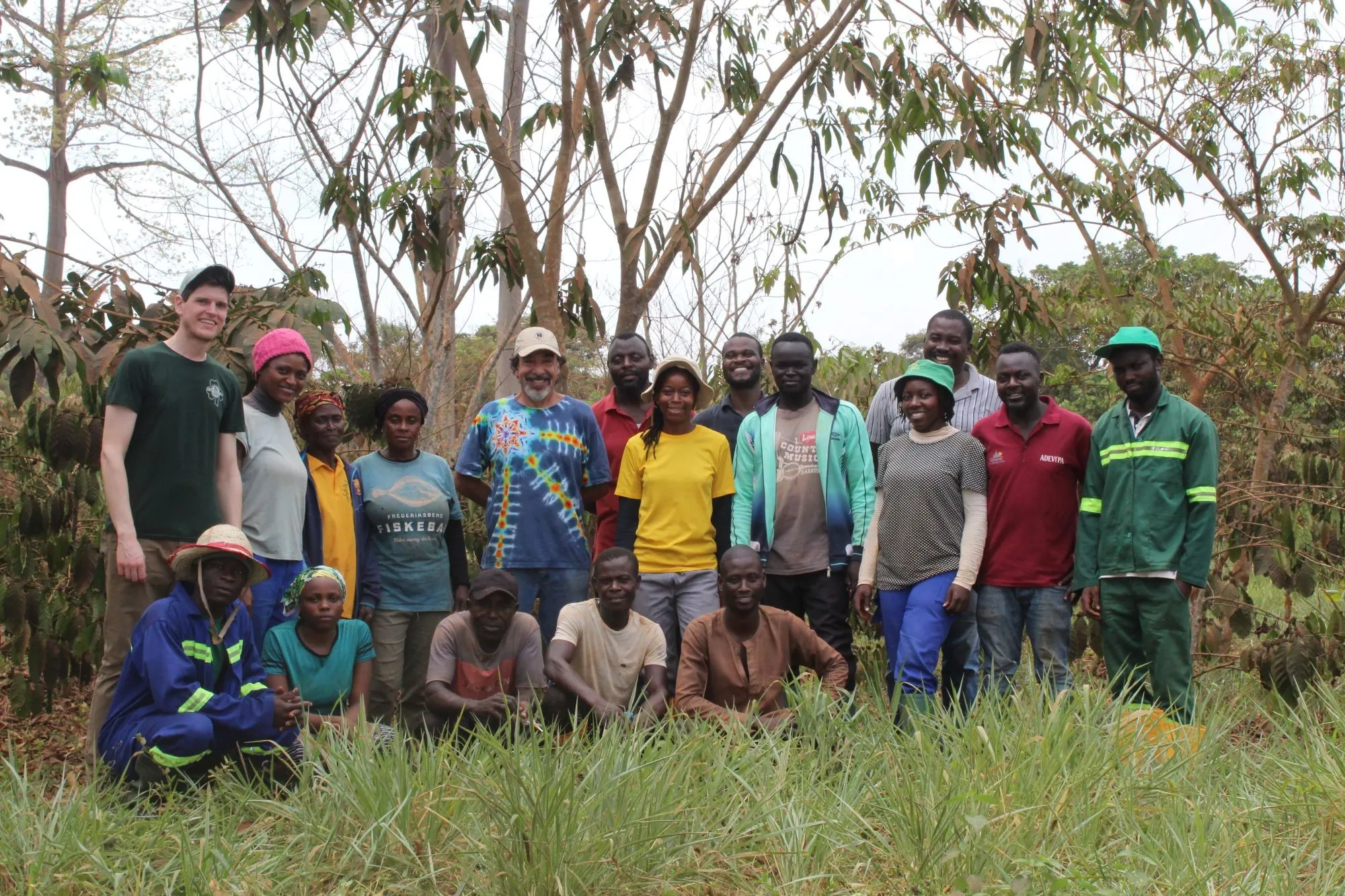
Powerful Action for the Development of the Kadey (PADK) is a non-profit organization based in Cameroon’s East Region, approximately 52 km southwest of Batouri, the divisional capital. Established in 2017 with the support of Mount Cameroon Tobacco (MCT) and its founder Edmond Nader, PADK was created to promote sustainable rural development and long-term community resilience.
The site that now hosts the Tropical Agriculture Research & Training Station (TARTS) has a long history. Originally constructed in the 1950s, it operated as a cigar wrapper tobacco processing facility under Société Camerounaise des Tabacs (SCT), the former state-run tobacco company. In 2000, Mount Cameroon Tobacco (MCT) purchased the site. In 2019, the property was placed in the hands of TARTS for responsible stewardship and community-centered development and an additional 15 h of land was purchased from the village of Ngotto.
What was once an industrial facility has been transformed into a center for regenerative agriculture, applied research, and farmer training.
Please read our Frequently Asked Questions thoroughly. If you have a question that isn't addressed, would like to know more about a particular project, or believe that you can help our organization, please reach out to us at info@padk.org and we will get back to you as soon as possible.

info@padk.org

(+237) 686 084 357

Ngotto (52 km SE of Batouri)
Kadey, East Region, Cameroon

BP: 15414 Douala
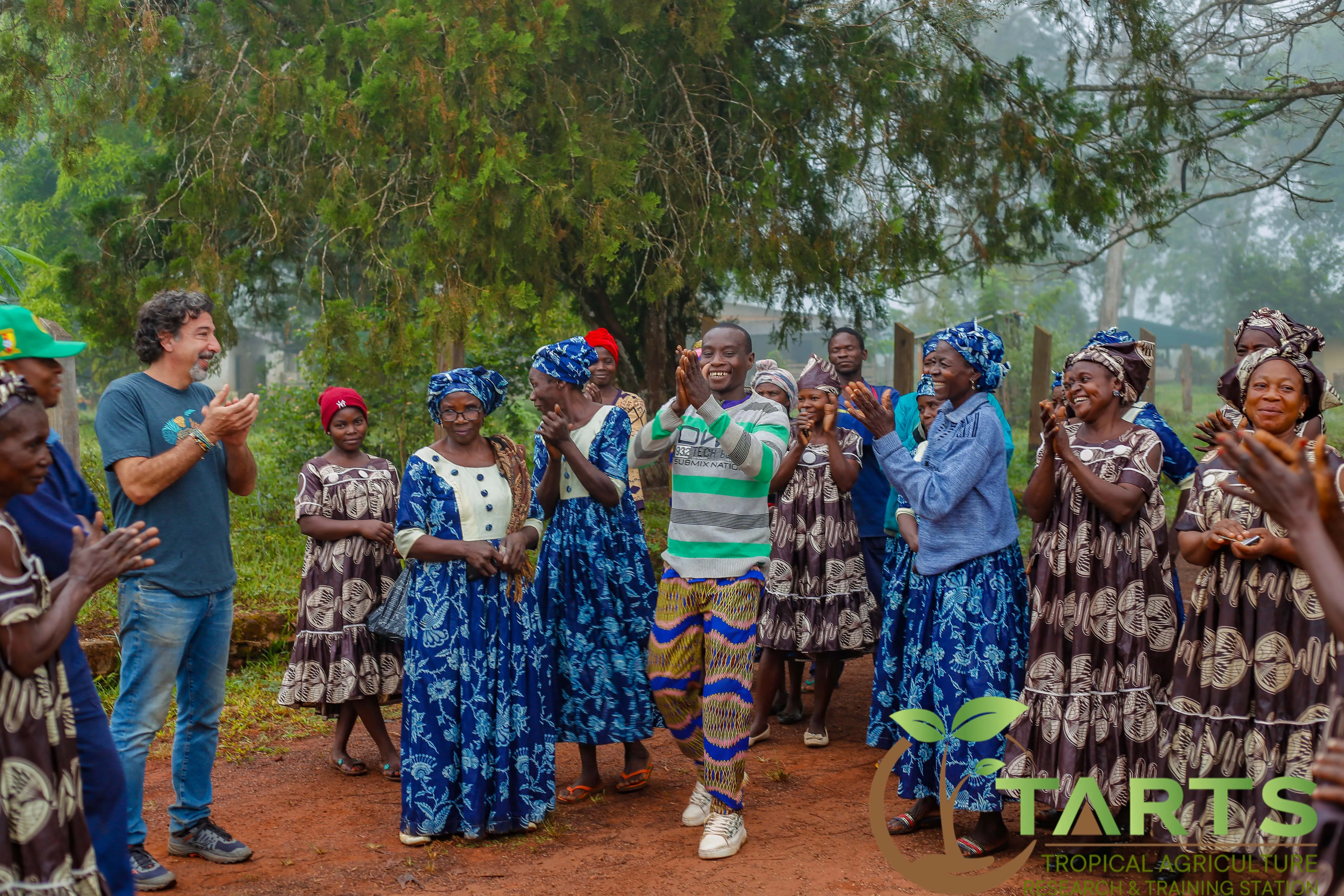
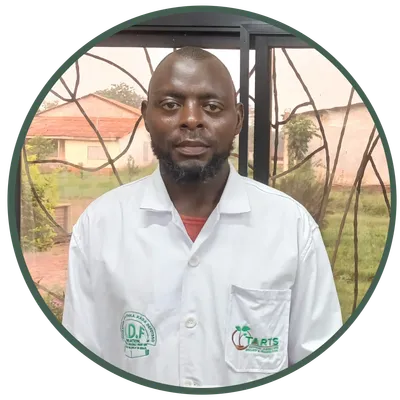
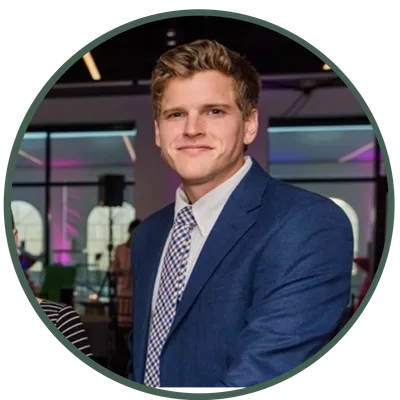
Our team has grown over the years, we are thankful to all who have contributed to our common interests and shared vision for the future.




Domestic Salaried:
Unfortunately, at this time, we have no current domestic openings, however please check back here and our social mecia, as we are growing & continuously adding to our staff.
Local Volunteering:
For International Supporters, Volunteers, and Expats
Site Visits:
While our on-site visit availability is limited, for serious inquiries, please contact us for more information.
Academic Programs & Internships:
While we are not offering formal employment opportunities, there are two meaningful ways to get involved with our work.

Local Volunteering:
For International Supporters, Volunteers, and Expats
Remote collaboration:
Remote collaboration is always welcome. Volunteers can support the organization from anywhere in the world by contributing skills such as research, grant writing, communications, design, mapping, data analysis, curriculum development, documentation, or technical support. These roles are typically flexible, project-based, and adapted to your availability.
Remote volunteers should be self-directed, reliable, and comfortable working across time zones and cultural contexts. This option is well suited for individuals who want to contribute consistently while remaining based elsewhere.
Special Note: For those interested in visiting and living on the farm, we only consider long‑term stays. A minimum commitment of three to six months is required. This ensures that time invested in orientation, relationship‑building, and training is mutually beneficial.
On‑site participants are expected to engage fully in daily farm life, including physical labor, communal responsibilities, and learning through practice. Life on the farm is simple and rooted in local rhythms; adaptability, humility, and respect for local leadership and customs are essential.
If you are interested in either option, please share a clear statement of intent outlining your skills, preferred mode of involvement, availability, and motivations. We prioritize applicants whose expectations align closely with the realities of our work and setting.